Showing posts with label wild west shows. Show all posts

Tuesday, January 19, 2016

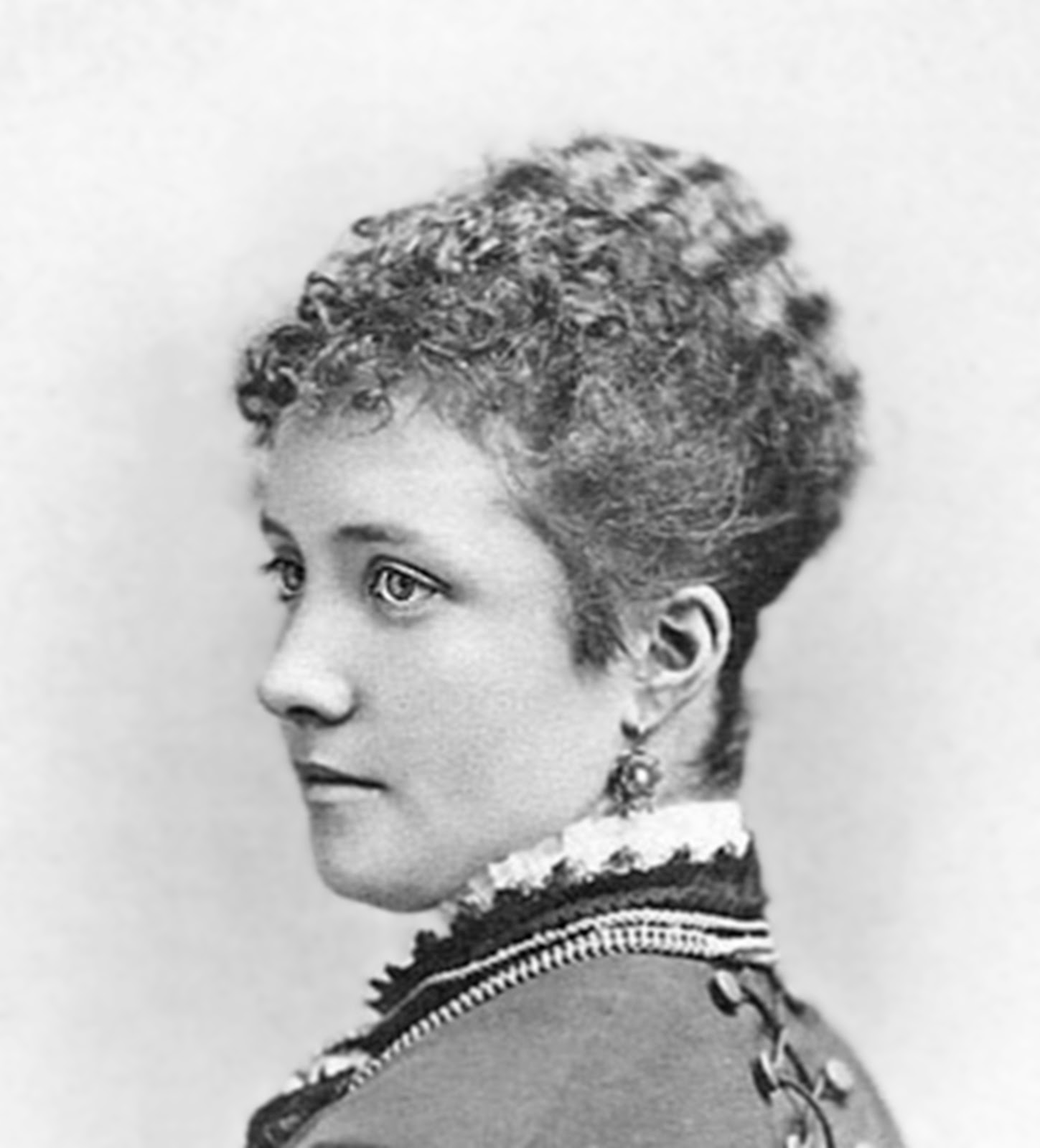
The Horse Queen of Idaho....Kittie Wilkins


In 1870, Kittie Wilkins built and empire that encompassed a large area of Southern Idaho, northern Nevada and eastern Oregon. She became an outstanding rancher and expert dealer in horses and often was called "The Horse Queen of Idaho," or "The Queen of Diamonds," due to her diamond brand.

Kittie was born in 1857 in Jacksonville, Oregon. Her parents, John R. and Laura Wilkins, were an ambitious couple who visited many boomtowns of the west before settling in Challis, Idaho, where they began raising cattle and horses. During her early years Kittie lived in several western states. John and Laura, however, never neglected their daughter's schooling. While her father taught her the horse trading business, Kittie's mother made sure she attended the finest schools. She grew into a well educated woman who could ride the range, carry out a shrewd business deal, or sit at the piano to entertain guests.


Kittie always claimed she got her start as a small child when two of her father's friends each gave her a $20 gold piece to invest. When her father became involved in the stock company, he used the money to buy Kittie a filly, which started her in business. She soon acquired her own herd that numbered between 700 and 800 horses. Kittie was an expert horsewoman, it was said she could ride anything with four feet on the ground, or anything with one foot on the ground and three feet in the air.
 

By the time she was 28, the Wilkins Company had moved to the Bruneau Valley of Owyhee County, Idaho. Although the outfit consisted of Kittie's father and her three brothers, she was the undisputed head of the company. She claimed every unbranded mustang on their range, which ran from the Humbolt River in Nevada, to the Snake River in Idaho, and from Goose Creek County in Idaho to the Owyhee River in Oregon. Kittie had the hardest working outfit west of the Mississippi River. Her boys were riding almost constantly as the ranch broke and shipped 154 horses every two weeks. The Wilkins riders became known as the finest in the world.
 

Kittie rode the open range with her cowhands, roping and saddle-breaking. The newspapers described her as a striking, blue-eyed blonde who rode a palomino the color of her hair. Seated upon a saddle that was mounted in silver and gold, Kittie was one with her horse as he flew over the rough terrain, rounding strays into the holding-corrals.

When traveling to the Eastern stockyards, Kittie took two trunks, one for here work-clothes and the other for her fancy outfits, which were worn with flair. Although she raised more than one eyebrow, the talented lady personally watched over her own horses, disdaining the idea that women were limited to playing the piano and attending tea parties. The herd was more important to her than the whispered gossip of others.


Because she was totally feminine, Miss Wilkins never failed to create excitement as she entered the marketplace. While selling her horses, the lady pulled her golden hair up under a hat and dressed in skillfully tailored mannish attire, something that was unheard of in that era. Whatever her attire, however, Kittie knew her business. She found a way to move the abundant wild mustangs of the West to the horse-hungry markets of the East.


One time she brought 3,000 head with her to St. Louis, Missouri and auctioned them off herself turning a tidy profit. It was rumored that the beautiful woman could make a better deal than her male counterparts and in 1891, Kittie Wilkins was the only female in the United States whose sole occupation was horse dealing.


Once the horse trading was over, Kittie changed her male attire and met the press wearing the most stylish fashions. In 1895, during an interview, a reporter told his friends he was hardly prepared to meet the tall young woman "dressed in a svelte, tailor-made costume, her blonde curls surmounted by a dainty Parisian creation, who greeted him with perfect self-possession and invited him to be seated."
He said she was a strikingly handsome woman. In 1904, at the age of 46, Kittie visited San Francisco. During her stay, she was a guest of the city and awarded, "The Palm for Beauty," which meant she was the toast of the town.


Often a cowboy who rode over the large Wilkins spread looking for a job, was surprised to find that "Kit" Wilkins was a she not a he. At first many of the men weren't sure they wanted to work for a female. However, once they realized the beautiful lady could not only handle her horse, but would also ride beside them, they always hired on. All of her "boys" were paid $40 a month and board, and they were strong, rough riders. Kittie ruled with an iron hand. If a cowboy got out of line, he was immediately fired. In a magazine article, one her "hands" wrote: "If a man weren't a good rider when he went to work for Kit Wilkins, he was a good rider when he left of he wasn't riding at all-unless in a hearse."


Many of Kittie's riders hired on as apprentices, and, under her guidance, became excellent cowboys. A few of them went on to fame in the Wild West Shows and others performed in rodeos. High Strickland became a Champion of the World several times; Jess Coates rode before the King and Queen of England in a Command Performance, and Walter Scott became part of Buffalo Bill Cody's show, and then became known as Death Valley Scotty.


Kittie was king to her crew and earned their admiration as a skilled rider. She was not afraid of the unbroken horses and would enter the pens and manage the most unruly. She knew more about pedigrees than most women did about stylish clothes.


With all her wealth and beauty, however, Kittie never married. It had been rumored she loved only one man. He was her top foreman and superintendent and they were reportedly engaged to be married. Unfortunately, he was killed while trying to remove and intruder from the Wilkins spread and Kittie was true to his memory the rest of her life.

Kit raised her horses on "Wilkins Island", a high plateau between what was then called "Kittie's Hot Hole" and the mining area of Jarbridge, Nevada. The Hot Hole was a natural hot springs at the bottom of a gorge, and today is known as "Murphy's Hot Springs." The Island was the company's headquarters where Kittie's "hands" built a corral that held the horses until they were shipped on to the eastern markets.


 Kittie's Letter Head


As Kittie rode the range and worked beside her cowboys, they shared a special camaraderie. Often, after a hard weeks work, she and her hands would ride into town and visit the local tavern for a bit of rest and frivolity. On one of these occasions, the Wilkin's boys were so carried away with their fun-making that someone "accidentally" opened the corral gate and the entire herd of captured "dollars" escaped.

Mrs. Alice Hicks, of Mountain Home, Idaho, remembers both Kittie and the tavern, as her father, Elijah Fletcher, once worked for the Wilkins. In a letter, she described a day in which she and her brother rode into town with their father to buy beef. Kit was standing in the door of the tavern and she greeted Elijah in a friendly manner saying, "Hello Lige, come on in and join the boys." When her father left the children sitting in the wagon, Mrs. Hicks recalls being a bit upset because at that young age she considered a tavern a den of "sin."


Although respectable women of that period didn't enter a tavern, it must be remembered that Kittie Wilkins was not an ordinary woman. She was always a lady, but she lived by her own rules.
Kittie had a lively personality and was a polished publicist. Her news releases were consistent and timely. She never deviated from her original tale of how she got her start with the two $20 gold pieces. Kittie's beauty and her success stories made headlines from San Francisco to St. Louis. Reporters admired her and the public enjoyed reading about the charming woman who many called "The Golden Queen".


Her generosity extended beyond the welfare of the cowboys who rode beside her on the ranch. Kittie supported an orphanage in Salt Lake City, Utah, and she donated to a Catholic academy near San Francisco. When the boys were old enough to work, they were hired as hands for the Wilkins Company. Several of the girls were taken into Kittie's home to assist with the housework, and a few she sent on to further their education. Numerous letters of appreciation from those who Kittie helped are on file, along with her property deeds and old records.


As time passed and Kittie grew older, she may have tinted her hair a bit, but she never lost that inner spark that made her so special. When she died of a heart attack in 1935, at the age of 79, no one thought of Kittie as an old woman.

She is buried in the Mountain View Cemetery in Mountain Home. There is a modest stone bearing a simple inscription in which her name, birth and death dates are followed by the words, "Horse Queen of Idaho."


Although Miss Wilkins was one of the best known women of her generation, there has been very little written about her. Bits and pieces of Kittie's colorful life have come from old newspaper articles, a few paragraphs here and there, and through the courtesy of the Elmore Historical Society in Mountain Home, Idaho.
 

this is an excerpt from the book "Daughters of the West", by Anne Seagraves.


Our family has been dedicated for 30 years in serving the 
Western Horseman the safest most durable 
Quality American made leather horse tack....... Buckaroo John Brand Buckaroo Leather, The Brand to Demand 
Visit Our Unique Store Today  
Buckaroo Leather Shopping Site

Monday, June 9, 2014

America's First Cowgirl..Lucille Mulhall


Equally skilled with rifle, lariat and horse, a teenager from Oklahoma named Lucille Mulhall became America’s first cowgirl. 

Lucille Mulhall was born on October 21, 1885, in St. Louis, Missouri to Colonel Zack and Agnes Mulhall. Lucille Mulhall has been given many different titles. Rodeo Queen, Queen of the Western Prairie, Queen of the Saddle, American's Greatest Horse Woman. But there is no doubt that she was American's First Cowgirl.

Will Rogers wrote that Lucille's achievement in competition with cowboys was the 'direct start of what has since come to be known as the Cowgirl'. He continued to write, “there was no such a word up to then as Cowgirl”.  Lucille beat dozens of cowboys in a 1904 cattle-roping competition, she set world records.

Native American tribes still roamed the open grassland of the Mulhall Ranch when Lucille was growing up. Wolves prowled the prairie, preying on the Mulhall livestock. Cowhands were a vital part of ranching; roping, branding, round-ups and shooting were practical skills instead of pastimes. The little blonde girl with blue-gray eyes was an eager student for the ranch hands and cowboys who lived in the bunkhouses of the Mulhall spread. 


Lucille, instead of learning piano or sewing like her sisters, learned to toss a lariat and tie a steer. Lucille learned her horsemanship and skills from the Cowboys who rode the cattle drives of the Old West.


Lucille Mulhall was a cowgirl long before she entertained crowds with feats of horsemanship on Governor, her trained horse. By the age of 7, she was riding around her father’s 80,000-acre ranch. Cowboys who rode the plains of the Indian Territories tutored her in the art of lassoing. 


Zack Mulhall claimed that when his daughter was 13, he told her she could keep as many of his steers as she could rope in one day. Lucille, he bragged, didn’t quit until she lassoed more than 300 cattle! "By the age of fourteen,” the New York Times reported, "She could break a bronco and shoot a coyote at 500 yards.” Teddy Roosevelt was among Lucille’s fans. 

While campaigning in Oklahoma as a vice presidential candidate in 1900, Roosevelt first saw the blonde teenager perform. It was the Fourth of July, and Lucille roped in front of a crowd of 25,000 people at a "Cowboy Tournament.” The Daily Oklahoman reported, "Roosevelt was most enchanted with the daring feats of Lucille Mulhall.” "She rode beautifully throughout the contest and lassoed the wildest steer in the field.”


Teddy Roosevelt was so dazzled by the 14-year-old’s skills that he invited the Mulhalls to join him and a select group of Rough Rider veterans at a private dinner. That night Lucille gave the hero of the charge up San Juan Hill the silk scarf she had worn during the Cowboy Tournament.

When Zack Mulhall reciprocated the dinner invitation by asking Roosevelt to stay at his ranch, Teddy readily accepted. After watching Lucille’s daredevil antics on the ranch, Roosevelt encouraged her father to get her more exposure. "Zack, before the girl dies or gets married or cuts up some other caper,” Roosevelt reportedly said, "you ought to put her on the stage and let the world see what she can do.” 


During that same visit, Roosevelt spent time in the saddle riding alongside Lucille. He saw a gray wolf at a distance, which whetted his appetite for the hunt. The wolf eluded Roosevelt that day, but it didn’t escape Lucille. After Roosevelt left, she hunted down the predator. By one account, she dispatched it with a shot from her Winchester, but in another version she lassoed the creature and clubbed it to death. The pelt was sent to Roosevelt, who displayed it in the White House after he and McKinley won the presidential election that fall. Roosevelt later gave Lucille a saddle and an 1873 Winchester .44-40 that had been presented to him.


Lucille Mulhall, was the first well known cowgirl. She competed with 'real' cowboys - the range hardened cowboys accustomed to riding for days in the saddle; the cowboys who spent many hours branding cattle. Her expert roping skills were a natural talent honed by the skills of another natural roper - Will Rogers. She not only was an expert at using the lariat but she had a natural gift of working with horses. She trained horses to respond to the roping of a steer as well as how to perform a number of what she called 'tricks.' Her trained horses she called 'high schooled horses' and one was particularly famous: "Governor."

She claimed her horse, Governor, knew at least forty tricks. He could pull off a man's coat and put it on again, could walk upstairs and down again, a difficult feat. He could sit with his forelegs crossed, could lie down and do just about everything but talk.

In 1904 Lucille competed against the best cowhands from across the Southwest in a roping contest at Dennison, Texas. In this competition she won a belt buckle, declaring her to be the World's Champion Lady Roper. She won three solid gold medals in Texas for steer roping, a trophy for winning a Cutting Horse contest as well as many other medals, trophies and honors. At the turn of the twentieth century Lucille Mulhall was American's greatest cowgirl.

While still in her early teens, Lucille was the top cowboy performer in the West. Extremely feminine, soft-spoken, and well educated, she seemed a paradox, for she was so steel-muscled she could beat strong and talented men at their own games. She could have been a society belle, but she loved the rough, dangerous life of a cowboy. Had she been a man, she would have been content to work on a ranch, but as a woman she was a novelty and the only way she could make use of her singular talents was in show business. 


The term cowgirl was invented to describe her when she took the East by storm in her first appearance at Madison Square Garden (in 1905). "Against these bronzed and war-scarred veterans of the plains, a delicately featured blonde girl appeared,” a 1905 New York Times profile intoned. "Slight of figure, refined and neat in appearance, attired in a becoming riding habit for hard riding, wearing a picturesque Mexican sombrero and holding in one hand a lariat of the finest cowhide, Lucille Mulhall comes forward to show what an eighteen-year-old girl can do in roping steers.”
In 3 minutes and 36 seconds, she lassoed and tied three steers. "The veteran cowboys did their best to beat it,” the New York Times reported, "but their best was several seconds slower than the girl’s record-breaking time. 


The cowboys and plainsmen who were gathered in large numbers to witness the contest broke into tremendous applause when the championship gold medal was awarded to the slight, pale-faced girl, and from that day to this Miss Mulhall has been known far and wide throughout the West as the Queen of the Range.”

Lucille had set a new world record. She won a gold medal and a $10,000 prize. Just as she had dazzled Teddy Roosevelt, Lucille now entranced journalists. Newspapers showered her with titles like "Daring Beauty of the Plains” and "Deadshot Girl,” but the one that stuck was "Original Cowgirl.”


Lucille’s career took her to Europe, where she performed for heads of state and royalty. She officially retired in 1917 at age 32. Live Wild West performances were being eclipsed by the rise of Hollywood westerns. Ironically, many of the stars of silent movies, including "King of the Cowboys” Tom Mix, got their start in Zack Mulhall’s Congress of Rough Riders. But as late as the 1930s, Lucille still did exhibition riding on the Mulhall Ranch.

Throughout her life, Lucille remained captivated by show business and more loyal to her father than to any other man. Her two marriages ended in divorce, and she rarely saw her son, born in 1909, because she was always on tour. Though Lucille was a top draw at Wild West shows and had run her own company, "Lucille Mulhall's Round-up," many people considered her an ineffective wife and mother because she had never learned to do "woman's work."


Although Wild West shows became less popular and less financially viable starting in the mid 1910s, Lucille and her brother Charley continued to perform in them through the 1930s. Show attendance dwindled, as did the number of performers. Despite the lack of publicity being given to wild west shows in the shadow of the polio epidemic, the United States' entry into World War I, and then the Great Depression, Lucille seemed unable to pull herself away from the limelight. She made her last known public appearance in September of 1940.

Lucille went back to work at her families ranch, which was located fourteen miles north of Guthrie, Oklahoma, on highway 77. The Mulhall ranch at one time encompassed 80,000 acres of land, much of which was unclaimed land. In addition some land was leased. The original ranch began with 160 acres claimed at the 1889 Oklahoma Land Opening. 


The Mulhall family operated their show and cattle business from this ranch and had many visitors. Some of their famous visitors were President Theodore Roosevelt, Will Rogers, Tom Mix and even the outlaw Henry Starr. Geronimo also was an admirer of Lucille's talent and gave her a beaded vest and a decorated Indian bow.

Lucille Mulhall died less than a mile from the Mulhall Ranch in an automobile accident on December 21, 1940. She was only 55 years old. In December 1975, she was posthumously inducted into the National Rodeo Hall of Fame.


Our family has been dedicated for 30 years in serving the 
Western Horseman the safest most durable 
Quality American made leather horse tack....... Buckaroo John Brand Buckaroo Leather, The Brand to Demand 
Visit Our Unique Store Today  
Buckaroo Leather Shopping Site

Thursday, July 14, 2011

Jo Monaghan -The Ballad of Little Joe


Josephine (Jo) Monaghan
"The Ballad of Little Joe"


In 1904, the Boise City Capital News reported the death of Jo Monaghan, "a well-known character" who had worked, ranched and ridden roundups in Idaho for more than thirty years.

Deemed like able, if a little odd, by his neighbors, Jo had never given anyone reason to suspect that he was actually a woman. He had even enjoyed such exclusively male privileges as voting and serving on juries.

Jo Monaghan arrived in Owyhee County, Ruby City, Idaho in 1867. This city was Idaho's latest center for the gold rush fever. Jo was only 5ft tall in his cowboy boots. He was slight and and had a high pitched voice. His nick name became "Little Joe".


Jo Monaghan lived in Ruby City, in a little shack for 10 years. He tried his skill at mining
(but was unsuccessful) and sheep herding. He also raised chickens and hogs, and made money by keeping a cow and selling the milk to the miners.

He took a job as a sheepherder
and spent 3 years, alone with just his horse and dog watching over the sheep. Jo fended off wolves through the long snowy winters.

Jo also worked on cattle drives or wrangling and shearing sheep for local ranchers. He never bathed or bunked with the other cow hands and laid his bedroll outside. He also had no interest in bars and dance halls.
Little Joe had only one close friend, an older mine superintendent. He entrusted him with all his hard earned money for safe keeping. The superintendent disappeared one day with all of Joe's savings, 2 decades worth. Joe and his neighbors formed a posse and chased after the thief, but never found him or the money.

Little Joe was a natural on horseback He took to breaking wild horses for a living-he became known throughout the Owyhee's as a superior horseman.

In early 1880's little Joe moved to Rockville, along the Idaho and Oregon border, and started a homestead. 21 citizens lived in Rockville-Joe loved the little city. He was well liked by all there and before long he had a dozen head of his own cattle and horses.

Joe continued to take jobs on other ranches. Through these ranchers- it was suggested that Little Joe try out for a Wild West Show. The other ranchers arranged a meeting between Little Joe and Andrew Whaylen. Andrew Whaylen was a former member of Buffalo Bill's Wild West Show who was starting his own show.

Whaylen's Wild West Show hired Little Joe and featured him as "Cowboy Joe" and offered $25 to any man who could bring in a bronc that Joe could not ride. Little Joe was able to ride any bucking horse with ease and even horses that had thrown all the other local riders.
Whaylen saw an article for Vitagraph Film Co. They touted themselves as the next big thing-"moving pictures". Whaylen wrote to the film co. and suggested they film his Wild West Show.

Albert Smith of Vitagraph eagerly accepted-it would be the first Western movie to be filmed west of the Mississippi. The shows star performance was Cowboy Joe Monaghan. He was filmed on a bucking bronc.


After the Wild West show closed for the season, Joe returned home to his ranch. In 1903 Joe was driving his cattle to pasture near the Boise river, when he took ill. He was taken to the Malloy Ranch for care. He died there on January 1904.


During the burial preparations, Joe's long held secret was revealed. Joe was actually a woman. There was further evidence found in Joe's home. The neighbors were going through Joe's things and found letters written by Joe's sister.


The letters told about a debutante from Buffalo New York, Josephine Monaghan, who had a child out of wedlock. She was disowned by her wealthy family. Her son's name was Laddie. She was a desperate mother trying to make a living by working as a waitress at a restaurant in New York City. Laddie was born in 1866 and her and the child were abandoned by the father. At one point Joe was forced to put, Laddie in an asylum. All this became to much for Josephine (Joe) and she left her child with her sister.

Laddie eventually graduated from Columbia Law School and entered the New York State Bar Association.

Josephine (Jo) Monaghan's amazing story was made into a movie called "The Ballad of Little Joe".


Information for this story came from the books-
"Cowgirls" by candace savage
"More Than Petticoats:Remarkable Idaho Women" by Lynn E Bragg


Our family has been dedicated for 30 years in serving the
Western Horseman the safest most durable
Quality American made leather horse tack.......Buckaroo John Brand
Buckaroo Leather, The Brand to Demand
Visit Our Unique Store Today
Buckaroo Leather Shopping Site

Thursday, September 16, 2010

Buckaroo Leather is Proud to have the Endorsement of National Mounted Shooting Champion, Denny Chapman!


Buckaroo Leather is proud and excited to have Denny Chapman, a national champion of mounted shooting and a world famous specialty trainer, endorse Buckaroo Leather's quality leather horse tack! Denny now uses our Quality American made tack on his performance horses and at his training school.

"I am proud to use and endorse Buckaroo Leather Products. The highest quality American made leather products on the market.....Can't wait to use it on my competition/performance horses and on my client's horses here in training.
Thanks, Buckaroo Leather!!!"-Denny Chapman


Denny Chapman is a professional announcer and equine entertainer, trainer and clinician with more than 20 years in the industry.

A member of the famed Old Timers Rodeo and Wild West Performers Club and the prestigious former Wild West Arts Club in Las Vegas, Denny has served as a mounted shooting, trick horse and trick riding clinician and performer for many major equine events including Equine Affaire in Columbus OH and the Can-Am Equine Emporium in Ontario, Canada. He has entertained at professional sporting events and has also served as the featured performer as the "Singing Cowboy" in the famous Kentucky Horse Park's "Best of the West" show.

Denny also stared in the TV Show "Top Shot" by The History Channel.

He is one of the most recognized figures in the sport of Mounted Shooting as a competitor, announcer and clinician and recently won the title of 2009 Florida State SASS Rifle and Open Class Extreme Mounted Shooting Champion. Denny has also competed within the ranks of the American Quarter Horse Association, the National Reining Horse Association, the World Foundation Quarter Horse Association, the United States Team Roping Championships, and is one of the few certified male side saddle instructors in the country.


Denny is one of the most versatile equine entertainers and clinicians in North America. Having worked with more than 40 breeds of horses, He has experience in Mounted Shooting, English and Western Horsemanship, Dressage, Tandem Riding and Driving, Roman Riding, Liberty Horses, Trick Horses, Trick Riding, Fire Jumping, Dressage and High-School Horses, Mounted Trick Roping and Whip Cracking.

Denny is available on a limited basis for private/group lessons and specialty clinics. He teaches Basic, Intermediate and Advanced Horsemanship as well as the following specialties:

*Mounted Shooting

*Sidesaddle Equitation and Horsemanship

*Trick and Roman Riding

*Trick and Liberty Horse Training


Denny specializes in trick, liberty and behavioral training as well as preparing horses and competitors for the sport of cowboy mounted shooting

I encourage all you buckaroo and buckarettes to visit Denny’s website, DennyChapman.com, follow him on facebook and sign up for his blog. His website has some videos of his performances and more information on his classes and clinics.


Our family has been dedicated for 30 years in serving
the Western Horseman the safest most durable Quality
American made leather horse tack.......Buckaroo John Brand

Buckaroo Leather, The Brand to Demand
Visit Our Unique Store Today
Buckaroo Leather Shopping Site