Showing posts with label pioneer women. Show all posts

Wednesday, March 18, 2015

Stories of the Old West and the Pionners.....Snakes!


The old west and American prairie are full of stories, legends, and lore. Some about cowboys and their courage, about cowgirls and prairie women strength, and of course Indians.

But have you heard about Snakes and Snake Lore.......

I came across some great stories of snakes and superstitions......


Indians believed that by killing a snake they would make the "other" snake tribes mad-so Indians did not kill snakes.......

So when the Pioneers and early settlers came to the old west there were a lot of snakes!!!

Pioneer women found the snakes to be a very large "inconvenience"- they were always showing up in their frontier home while cleaning the kitchen or under a bed. Here is a true story of one Pioneer woman's experience with her first rattlesnake....


"Returning from the woods one day with an armful of sticks, I saw a large snake lying across the path in front of my three year old daughter who was with me. I caught and pushed her behind me, then throwing down my sticks, picking out the largest as I did, I went for the snake. The stick was rotten and broke with my first stroke. It enraged the rattler. He coiled himself up on one side of the path, and, rearing his head two or three feet from the ground, ran out a red forked tongue and made such a noise with his rattles that my other daughter in our cabin nearby ran to the door to see what it was. 
 
Without taking my eyes off the snake I called to her to get the hoe. She ran around and came up behind us with it. Then, without moving from my tracks I took the hoe and made short work with his snakeship. We dragged him up to the house and cut off the rattles, sixteen in number, and measured him. He was over five feet in length and as large around as a man's arm."

(from the book "True Tales of the Old-Time Plains" by David Dary) 


There is another story told, about a boy who found a hole with a few snakes.....later he came back with his friend to the same hole and they found and killed 46 snakes. The boys told the other frontier men and they came back to investigate. The men dug a hole around the original hole and found more snakes.....1700 to be exact. They killed them all.....

The men kept on digging, hoping to find an end to the snakes, but it never came....at first the snakes were cowardly and timid, but as time went on the snakes started to fight back and become vicious. The men kept on. When the number of snakes dead reached 4,000 the men decided to pour blasting powder down the hole.....

Needless to say the remaining snakes were disposed of. The pioneer men reasoned that the hole they found led to a larger cavern in the depths of the earth. The believed that many thousands of snakes, from all over, gathered in this cavern for winter.


The old west stories and tales of the pioneer men and women are fascinating!! And I guess they can teach us a few lessons-

If you see a snake hole-let it be, who knows how many more snakes are down there!!!!!!!!


Our family has been dedicated for 30 years in serving
the Western Horseman the safest most durable
Quality American made leather horse tack.......Buckaroo John Brand
Buckaroo Leather, The Brand to Demand
Visit Our Unique Store Today
Buckaroo Leather Shopping Site

Tuesday, July 31, 2012

Lizzie Johnson...Texas Cattle Queen

 
Lizzie Johnson Williams was a pioneer women of the old west..a "pioneer" in every sense of the word. She was smart; hardworking, a businesswoman and she loved the finer things!! And she was the first and only woman in Texas history to accompany her own herd of Texas longhorns up the Chisolm Trail.

Elizabeth E. Johnson was born in Missouri in 1843. Lizzie moved to Hays County, Texas where her father started the Johnson Institute in 1852. At sixteen she started to teacher at her fathers school. She moved to teach at other schools in Texas all the while saving her money. She was smart with her money and invested it in stocks. She purchased $2,500 worth of stock in the Evans, Snider, Bewell Cattle Co. of Chicago. She earned 100 percent dividends for three years straight and then sold her stock for $20,000.!!


On June 1, 1871, Lizzie invested her money in cattle and registered her own brand (CY) in the Travis County brand book along with her mark. She was an official cattle woman.

In the summer of 1879, at the age of thirty-six, she married Hezkiah G Williams. Hezkiah was a preacher and widower who had several children. After her marriage, Lizzie continued to teach and invest in cattle. Lizzie was a smart businesswoman, even after her marriage she continued to maintain control over her wealth and cattle business. A progressive thinker, she had her husband sign a paper agreeing that all of her property remained hers.


Hezkiah did not have the same "head" for business that his wife possessed. In 1881, on his own, he entered into the cattle business. Along with poor business skills, Hezkiah also liked to drink. Lizzie had to constantly help her husband out of financial trouble.

Lizzie and Hezkiah traveled up the Chisholm Trail to Kansas at least twice. They rode behind the herd in a buggy drawn by a team of horses. For several years she and her husband, after coming up the Chisholm Trail, spent the fall and winter months in St. Louis, where Lizzie made extra money by keeping books for other cattlemen. While in St. Louis, she also liked to "treat" herself to some finer things, like current dress fashions, fine clothes and jewels.

 Chisholm Trail
 

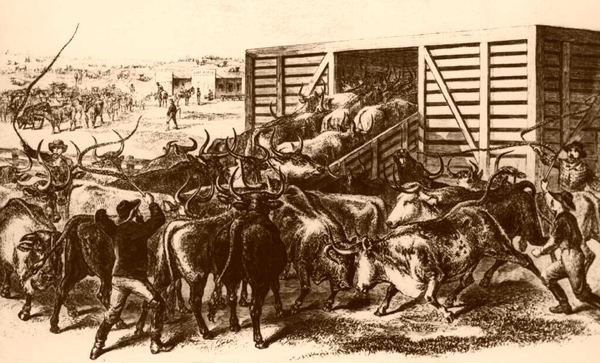
During the Civil War, Lizzie was able to grow her cattle herd by overseeing a process called "brushpopping". Since so many men were away at war and there were few fences to keep the cattle contained, the numbers of "unbranded" cattle in the brush of South Texas began to grow. At that time "unbranded" cattle were fair game- you found them - you kept them. Lizzie had her cowboys comb the thickets for cattle -"brushpopping" round them up and transport them to her growing ranch.

Hezkiah passed away in 1914 in El Paso. It is rumored that Lizzie purchased a $600 top-of-the-line coffin for her husband. When she signed the bill of payment, she wrote across it "I loved this old buzzard this much."

Lizzie eventually became somewhat of a recluse. She lived meagerly, wearing frugal dresses and just living on a diet of soup and crackers. On October 9, 1924 Lizzie Johnson Williams passed away at the age of 81. Her estate totaled $250,000. Family members found thousands of dollars in diamonds locked away in her basement and she had large holdings in Austin real estate.

Lizzie was a true "pioneer" of her time and a great inspiration to women of the old west..and today!


Our family has been dedicated for 30 years in serving the Western Horseman the safest most durable Quality American made leather horse tack....... Buckaroo John Brand 
 Buckaroo Leather, The Brand to Demand 
Visit Our Unique Store Today  
Buckaroo Leather Shopping Site

Thursday, April 19, 2012

Pioneer Women of the 1800's...Strong, Courageous, smart.

Women on the frontier in the 1800's were not the beautiful dainty wallflowers like their counter parts in Europe. The frontier women had to be strong, resourceful, hard working, and a great horseman.

Women in the 1800’s took part in all facets of Frontier Life. The hardship of frontier life required that all members of the family take part to make ends meet. So, 1800 women mounted their horses to hunt with their husbands and also camp out for days. Some women even became cattle-women. One such cattle-women was Elizabeth E. Johnson.

*Elizabeth E. Johnson was born in Missouri in 1843. She moved to Hays County, Texas soon after her father had established the Johnson Institute there in 1852. Lizzie began teaching at the school when she was sixteen. Later she left to teach in schools at Manor, Lockhart, and Austin. Quietly she saved her money and added to her income by writing stories for Frank Leslie’s Magazine. As she accumulated money, she invested it. At one point she purchased $2,500 worth of stock in the Evans, Snider, Bewell Cattle Co. of Chicago. She earned 100 percent dividends for three years straight and then sold her stock for $20,000. On June 1, 1871, she invested the money in cattle and registered her own brand (CY) in the Travis County brand book along with her mark.

Lizzie Johnson’s wealth continued to grow. So did her responsibilities. In the summer of 1879, at the age of thirty-six, she married Hezkiah G Williams, a preacher and widower with several children. She continued to teach school in Austin, write magazine articles, and invest in cattle. She maintained control over her wealth, having had her husband sign a paper agreeing that all of her property remained hers. On his own, Hezkiah entered the cattle business in 1881, but he was a poor businessman who also liked to drink, and Lizzie had to keep pulling him out of financial trouble. At least twice Lizzie and Hezkiah traveled up the Chisholm Trail to Kansas. They rode behind the herd in a buggy drawn by a team of horses. This was about 1879, and Lizzie was the first woman to drive her own herd up the trail. For several years she and her husband, after coming up the trail, spent the fall and winter months in St. Louis, where Lizzie made extra money by keeping books for other cattlemen. When she died in 1924, at the age of 81 (her husband had died on 1914), Lizzie Johnson’s estate totaled more than $200,000, including large holdings in Austin real estate.


(*An excerpt from Emily Jones Shelton, “Lizzie E Johnson: A Cattle Queen of Texas” Southwestern Historical Quarterly, Vol L (1947)
pp 349-366)

The old west is filled with stories like this of men and women and their adventures on the trail. They worked hard for a living and expec
ted their horse tack to work just as hard and to last.

The styles of the old time horse tack are not only appealing to the “old time cowboy” but like the horse tack of the 1800, the durability and quality is essential to the cowboy and the horse.

Breast Collar Old Martingale style "Choker"

Hand crafted from the finest Hermann Oak Rough Out Oiled Golden Bridle Leather with chap lining. This Old Martingale style shaped breast collar (some in the sage call it a "CHOKER") features an over the shoulder fit for a better pulling position. Also featured is the adjustable neck strap and billet.


Cowboy Style Headstall/ReinSet

This old time Traditional Buckaroo Cowboy Style Leather Headstall Set with Shaped Cheeks and Flair Brow is hand crafted from premium heavy weight Harness Hermann Oak Leather.


Our family has been dedicated for 30 years in serving the
Western Horseman the safest most durable
Quality American made leather horse tack.......Buckaroo John Brand
Buckaroo Leather, The Brand to Demand
Visit Our Unique Store Today
Buckaroo Leather Shopping Site

Wednesday, June 29, 2011

The Old West Cowgirl Spirit......

Old West Pioneer Women branding cattle- from the book "Cowgirls Women of the wild west” by Elizabeth Clair Flood


The cowgirls of the old west had spirit, courage, drive, strength (both physical and mental) and could ride a horse, take care of a homestead, brand cattle and shoot a gun!!!!


This post is for all the Cowgirls and the Cowgirls at heart who share that same independent feisty spirit of the old west, today........

The story below is from the book "Cowgirls Women of the wild west” by Elizabeth Clair Flood

“One afternoon in 1888 trail driver Samuel Dunn Houston of San Antonio Texas hired a few men in Clayton New Mexico for a spring drive to
Colorado. He found “a kid of a boy” at the livery stable who wanted to go up the trail.
Named Willie Matthews, he was 19 years old, weighed 125 pounds and was from Caldwell, Kansas. Houston soon discovered that he was also a good hand. In the Trail Drivers of Texas Houston reported:
“The kid would get up the darkest stormy nights and stay with the cattle until the storm was over. He was good natured, very modest, didn’t use and cuss words or tobacco and was always pleasant……I was so pleased with him that I wished many times that I could find two or three more like him.”

Houston wrote that the drive went smoothly until they reached Hugo, Colorado when Matthews approached him after dinner on the trail and asked if he could quit. “He insisted, said he was homesick, and I had to let him go.”
About sundown, all the cowboys were sitting around the campfire when a young lady “all dressed up” approached from the direction of town. Houston was baffled as to why a woman would visit his camp. When the lady was twenty feet from him, she laughed. “Mr Houston, you don’t know me, do you?”
Houston’s mouth dropped open. “Kid, is it possible that you are a lady?” He and the rest of his men were dumbfounded. All Houston could think of was what was said on the trail over the last three weeks.
He ordered her to sit down on a tomatoe box and explain herself. She told Mr. Houston that her father was an old-time trail driver from Caldwell. When she was 10 or 12 years old, she used to listen to his stories about he cow trails in the 1870’s. Fascinated, she vowed that she too would drive the cattle one day.
“Now, Mr Houston, I am glad I found you to make the trip with, for I have enjoyed it, “ she said as she left for home."

A traditional cowgirl outfit in the old west consisted of:

A typical pair of Victorian gauntlets, a short skirt, tall lace up boots, and a red scarf. The sash was probably a style adopted from Charlie Russell who, inspired by the vaquero costume always wore a red sash.
The Victorian riding gauntlets featuring embroidered roses were often sold at Western trading posts. Inspired by cavalry gauntlets, cowboys and cowgirls adopted the style of the work glove embellished with various Indian designs.
(the 2 pics are both from the book "Cowgirls Women of the wild west” by Elizabeth Clair Flood)
Cowgirl riding gauntlets (pic to the left) came in a wide variety of commercial designs. Many were embroidered with horse shoes and whips, others were decorated in buckskin fringe. Cowgirls wore gauntlets for work and in the show arena.

Our family has been dedicated for 30 years in serving the
Western Horseman the safest most durable
Quality American made leather horse tack.......Buckaroo John Brand
Buckaroo Leather, The Brand to Demand
Visit Our Unique Store Today
Buckaroo Leather Shopping Site

Tuesday, November 24, 2009

Pearl Hart-1800 Pioneer Women

The Last of the Lady Road Agents


The era of the old west was the most colorful period of our nation's history. It was a time when notorious outlaws and brave lawman became legendary characters whose name are more popular today than in the 1800s. By the turn of the century though, the west was becoming civilized. Trains were slowly replacing the older methods of transportation and most of the desperados were either dead or in exile. The days of the stagecoach robberies were past, at least the citizens of Arizona thought so. On May 30, 1899 when two people stepped out onto the road with guns drawn, and commanded the driver of the Benson-Globe stage to "Halt!" and, the short career of Pearl Hart, who is known as "The Last of the Lady Road Agents" began.

When the stage came to a stop, three nervous passengers disembarked and obediently raised their hands in the air. They noticed the bandits were an odd pair. One was tall, muscular and sported a fancy mustache. The other smaller one appeared to be a woman whose figure was poorly concealed. She was wearing a rough miner's shirt and blue overalls, which were tucked into course boots that were obviously too large. A few dark curls escaped from beneath the dirty cowboy hat that covered her head and the hands that ransacked the passenger's pockets were small and white.

The haul was not a poor one. A drummer had $290, a heavy set man turned over $36 and a Chinese merchant added $100. The robbers seemed content and the smaller one silently returned four dollars to each passenger for bed and food. Then they rode off into the bushes and the stage continued on its way at a fast pace. When it arrived in Globe, the driver ran in and notified the sheriff and an excited posse set out in pursuit of the dangerous renegades. The old timers, however, seemed almost happy, for to them a robbery meant the old west was still alive and kicking.


Meanwhile the road agents who were clearly novices attempted to cover their tracks. They were unfamiliar with the territory and spent three days plunging across canyons and doubling back, only to find themselves a few miles from the scene of the crime. When the posse found them they were sound asleep on the ground. Neither one even had the chance to spend a penny of their ill gotton gains.

The sheriff awakened the pair and asked the man his name. When he seemed hesitant to answer, the woman said, "Joe, its Joe Boot." No one ever knew his true identity, so that was how he was booked. Boot didn't give the lawman any trouble, he turned himself over without a word, but the woman was not anxious to go to jail, she put up quite a fight and had to be subdued. The Arizona Star reported, "She is a wild-cat of a woman and had she not been relieved of her gun a bloody foray might have resulted." When they reached the jail, Pearl was carrying all the money.

The path that led Pearl Hart to that fateful day in May was long and hard. She was born in 1872 in Ontario, Canada, and christened Pearl by her mother, no one is sure of her last name. It can be assumed Pearl had a normal childhood, very little has been written about her early years. She entered a boarding school for young ladies at the age of 16, and while there she met a personable man named Hart. He swept the girl off of her feet with his looks and promises. A year later they eloped, much to her mother's dismay.

Hart was a semi-professional gambler, sometime bartender and full-time drinker who spent more hours nursing his hangovers than working. Pearl returned to her mother several times during her marriage, but Hart always managed to convince her to give him one more chance.

In 1893 they went to Chicago in hopes of finding steady employment at the World Columbian Exposition. Hart was confident he could get a good bartending job. He ended up instead as a barker in a shabby side show. Pearl, however, discovered the glamour of the West in the form of the tall, muscular cowboys who were part of the entertainment. It wasn't long before one of the amorous cowhands convinced the pretty lady to accompany him to Colorado. He paid her way but soon left her there to fend for herself.

Pearl's admiration for cowboys ended and she began cooking in the mining camps of the west. For the first time she began to save money and was doing well. Pearl especially liked the attention she received from the male population. One day in Phoenix,Arizona , she ran into her husband. When he noticed she looked prosperous he decided to get a bit of her money. Once more Hart talked his way back into her life with the usual promises.

This time he did settle down for a few years and held a steady job. During that interlude they had two babies. Hart again showed his lack of responsibility when he began drinking and abusing his family. Pearl knew she really had enough of her husband and sent her children to her mother, who was living in Ohio.

Without the babies and her husband, Pearl returned to the mining camps disillusioned with life. She drifted from place to place and soon began drinking heavily and using drugs. There were many men in her life, but she was not a prostitute.

In 1889 Pearl met Joe Boot in a mining camp in Arizona, and they became close friends. Whether Pearl was in love with Boot or not has never been revealed, although at the time of their arrest she claimed undying affection for the man. At other times, however she expressed disgust for him and said he was weak and worthless.

Boot was with Pearl when she received a letter saying her mother who she loved very much, was ill and needed money for medical expenses. She and Boot looked at their resources and since neither one had any, devised a plan to rob the stage. At least that is the reason they gave the police. Boot said he just went along with it to help the women.

This was Pearl's first encounter wit h the law and her last, but it made headlines throughout the United States. Many newspaper reporters rushed to Arizona to write every detail of the "sordid" crime they could dig up, whether it was true or not. Pearl was portrayed as a fallen woman and described as a morphine fiend. Through the years writers have continued to tell of the notorious Pearl Hart who will forever be remembered as a stage robber.

Sheriff Bill Truman of Pima County said she was a tiger-cat for nerve and endurance and would have killed him if she could. In another report it was written, "She is a delicate, dark haired woman, with little about her that would suggest the ability to hold up a stage loaded with frontiersmen. She had refined features, a mouth of the true rosebud type, and clear blue eyes that would be confiding and baby-like were it not for the few lines that come only through the seamy side of life. In weight she is not over 100 pounds, in form slight and graceful".

Joe Boot, on the other hand was described by Sheriff Truman as, " a weak morphine-depraved specimen of mortality, without spirit and lacking intelligence and activity. It is plain the woman was the leader of the assorted partnership. She does not deny that such was the case and expresses nothing but contempt for her companion."

The prisoners were first taken to Florence for preliminary hearings and held over without bond to answer to the grand jury. Pearl was transferred to the Pima County jail at Tucson because there were no accommodations for women in the Florence jail. It was said Pearl cried when they separated her from Boot.

On October 20, 1899, The Tucson Star wrote of Pearl's escape from the Tucson jail. The officers were quite upset over it as they had taken every precaution for her safe keeping. The newspaper wrote, "It is evident that after everything was quiet someone entered the courthouse, walked up the stairway and entered the tower room. It was the work of but a few minutes to cut a hole through the wall into Pearl's room. She held a sheet to catch the plaster that fell by her side. After the hole was cut through, she put a sheet underneath, and placing her chair upon that crawled through the hole."

It was obvious she had an accomplice because she couldn't have managed it alone. The police believed it was Ed Hogan, who was serving a drunk and disorderly sentence. He was a trustee and also turned up missing the next day. Pearl was captured in New Mexico several days later and returned to Tucson.

The plight of Pearl Hart won the hearts of many, especially women. She had no prior arrest and they felt she should not be put on trial, convicted and sentenced under a law she or her sex had no part in making. She captured their sympathy and used it to help win freedom. However, no one really knows who Pearl was, her personality changed to suit her moods. In the eyes of many she was a petite woman who couldn't possibly have committed the crime. Others saw her as a depraved, fallen women. Even Pearl's vocabulary alternated between Western phrases, gutter slang and that of an educated woman. Later, during her confinement, she wrote poetry which showed an educational background.

On November 25, 1899 Pearl stood trial for her part in the robbery and was acquitted. The judge was furious and dismissed the jury. He immediately rearrested her, calling in a new jury. This time Pearl was charged with a lesser crime, stealing the revolver from the stage driver. She could not stand trial again for the robbery itself.

The Arizona Sentinel reported, "the action which will be telegraphed all over the country is, however, likely to do the reputation of Arizona a considerable amount of injury, as it will confirm many eastern people in the that the people of Arizona have a sneaking sympathy for crimes…In these days of women's rights the question of sex should not be allowed to play any greater part in crime than it is supposed to do in merit and achievement."

Pearl at the age of 28, was convicted and sentenced to serve 5 years in the territorial prison at Yuma, Arizona, her accomplice, Joe Boot, was sentenced to 30 years. Throughout the trial Boot had maintained he did it only to help a lady in distress. Although both Boot and Pearl had a "death-do-us-part" vow, he escaped a few months later and was never heard of again. Pearl entered the prison on Nov 15, 1899. She was the 13th female prisoner and became #1559.

A letter arrived at the prison from Pearl's brother in law that confirmed her first story of why she committed the robbery. It said, "To the Sheriff- I see by the papers that you have Miss Pearl Hart in custody in Arizona for some misdemeanor. Now, as I am her brother in law, I am interested in her welfare. It has been a long time since we have heard from her, and we did not know what had become of her. I assure you that her mother would be glad to have her at home. I have seen her sit and cry when we were talking about Pearl and wondering what had become of her…Now, I would beg of you to be as easy as you can, for we have not dared to let her mother know that we have heard anything of her and much less that she is a prisoner, as she is troubled with heart disease and the news might affect her seriously…James T. Taylor"

Pearl was the only female prisoner for almost nine months. By the time she was granted a pardoned she was sharing her cell with 3 other women.

Pearl's sister and her mother petitioned the governor for a parole. They said if Pearl obtained a release she would have the opportunity to play a leading role on the Orpheum circuit. Her sister had written a play which would dramatize Pearl's experience as a stage robber.

The petition was convincing and Governor Alexander O. Brodie agreed to sign it if Pearl would leave Arizona. She accepted the terms and was released a little over two years from the day she entered the prison.

It was said Pearl left the prison in good health and free from opium addiction. No one knows if Pearl's stage appearance was successful. The end of her life appears to be as confusing and as much a mystery as the lady herself.

Excerpt from the book " Daughters of the West" by Anne Seagraves


Our family has been dedicated for 30 years in serving
the Western Horseman the safest most durable Quality
American made leather horse tack.......

Buckaroo John Brand

Buckaroo Leather, The Brand to Demand
Visit Our Unique Store Today
Buckaroo Leather Shopping Site